
Parashat Pinchas:
What happened to the sons of Korach?
When thoughts of repentance arose in the hearts of the sons of Korach, they were moved to atone for their dishonor, by an offering of praise found in the Book of Psalms.
When thoughts of repentance arose in the hearts of the sons of Korach, they were moved to atone for their dishonor, by an offering of praise found in the Book of Psalms.

‘To what can the matter be likened? To that of the king’s cook, who knows the amount of the outlays of the king, for his table.’
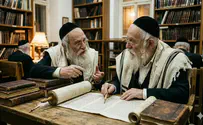
Moses is told in this parasha that he wiil not bring the Israelites into the Land. How do commentators explain that?

We learn from this Parasha, read in Israel this past Shabbat and next week in the Diaspora, the required lofty level of the leader of our people to guard himself against any suggestion of benefitting personally from his office.

First "provoke" followed by the next phrase asking 'How much longer will they not believe in me?' A survey of commentators explaining and contrasting the two dramatic verses.

What is the method of purifying the Levites and why is it written after the offerings at the Tabernacle dedication? Commentators weigh in on the meanings below the surface.

Because Yaakov chose Hashem to be his G-d, Hashem chose Israel - Yaakov’s nation - to be His special lot.

Why does Hashem’s decree to punish transgressors, the pupils of Rabbi Akiva, cause us to adopt some of the ways of mourners until Lag Ba'Omer?

The entire verse uses a double expression :’say’, but why?
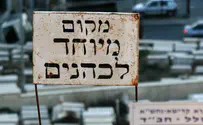
Various commentators are brought to bear on the reasons for the two fates for the two he-goats of Yom Kippur.

Jews always have more questions. Here are four.

When, chronologically, did our Parashah's first verses occur?
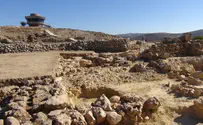
The korbanot in the Bet Mikdash - assuredly they were to unite worlds.
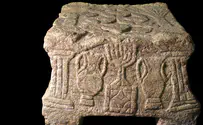
It wasn't just the work itself that was done as Hashem commanded, it was also the way it was done.
Hashem has no need for illumination, the mitzvah is solely for the honor and needs of Israel - and it also contains symbolism for daily life.
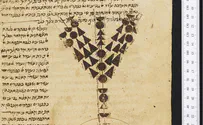
What purpose did the Table serve and what need was there in the Sanctuary and in the Temple, that required a Table?

‘If you accept the ordinances, there will be peace amongst you, and you will then merit to acquire the Torah.’
Why does it say ‘they journeyed from Rephidim and arrived in the desert’? After all, we know they were iin Rephidim beforehand from previous verses.

Why did Hashem cause the Israelites to worry about lack of water, and - further - bring them to a place of bitter waters?

Rabbi Nebenzahl: Hashem made a mockery of Pharoah and the Egyptians, to obviate any possibility of a mistaken impression that there was that there was a battle between two forces.
Commentators interpret the meaning of the words used to foretell the Exodus and the Israelites' becoming G-d's chosen nation.

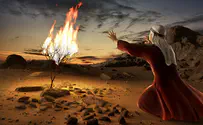
Commentators analyze the symbolism of the burning bush.
Why did Jacob ask to be buried in Israel? See what the commentators have to say.

Why did Yaakov send Yehuda to Egypt before he descended there to see his son Yosef at last?
We already know that everything that was created with man, was worthy of existing - except for the foreskin, as the Torah commanded us to remove it.
Why did Joseph go to the brothers he knew hated him - and why did Jacob send him, knowing the same?
Couldn't Yaakov simply avoided his brother?

In the end, they parted, by making a covenant - at Laban’s behest - between them, but what did Laban really want?

The wondrous outcome of Rivkah's pregnancy, is that all that the nations create in this world, in the end result, is for the benefit of Bnei Israel, in their service of Hashem.

Sarah recognized Hashem - with Abraham - when she was thirty-eight, the thirty-eighth year being reckoned with the earlier period, of not knowing Hashem.
Commentators weigh in on the unexpected laughter of Matriarch Sarah at the news that she would bear a son.

The Chatam Sofer reconciles the seemingly irreconciliable views of Rashi and of Ramban, and lauds Abraham's ability to instill faith in his descendants.
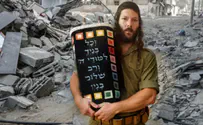
Why does Rashi comment: ’’Noach debased himself’ - he should have first engaged in planting something other than a vineyard."

A seemingly contradicttory account of the creation of vegetation and trees teaches a deep message about our relationship to G-d.

Our prayer to G-d during the Ten Days of Repentance is analyzed here in tribute to the victims of the Manchester terror attack.
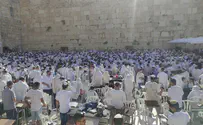
‘Do not think that these oaths are imposed on you alone- as if, but for this, you would not serve Hashem.'
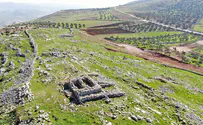
The wisest of men King Solomon - exclaimed (Mishlei 11:1): "Deceitful weights are an abomination of the Lord, but a perfect weight is His Will."

The two Sifrei Torah represent the two ways of serving Hashem.
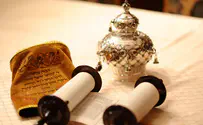
An enlightening look at commentators through the centuries on the question of the wording of the verses on the blessings and curses regarding Torah observance.
Great good awaits those who toil in the ocean of the oral Torah - as well as those who go in the way of עקב: fulfilling all the mitzvot.
